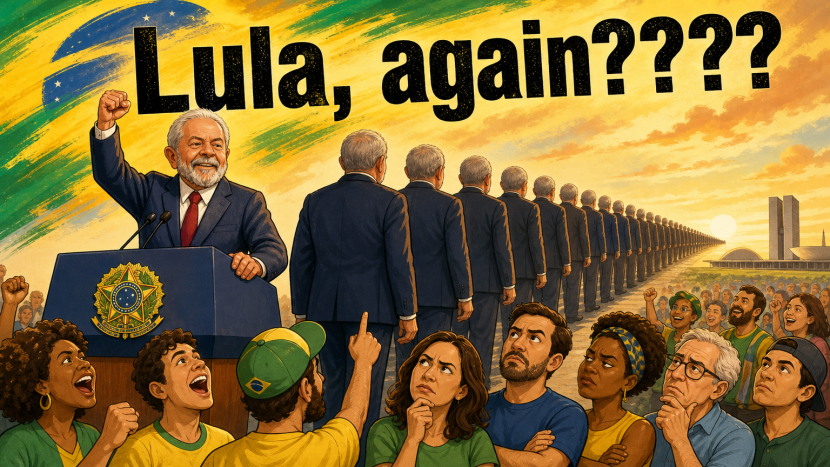
Lula, again ???
The Allowance Problem: Why Spending More Than You Collect Always Catches Up With You.
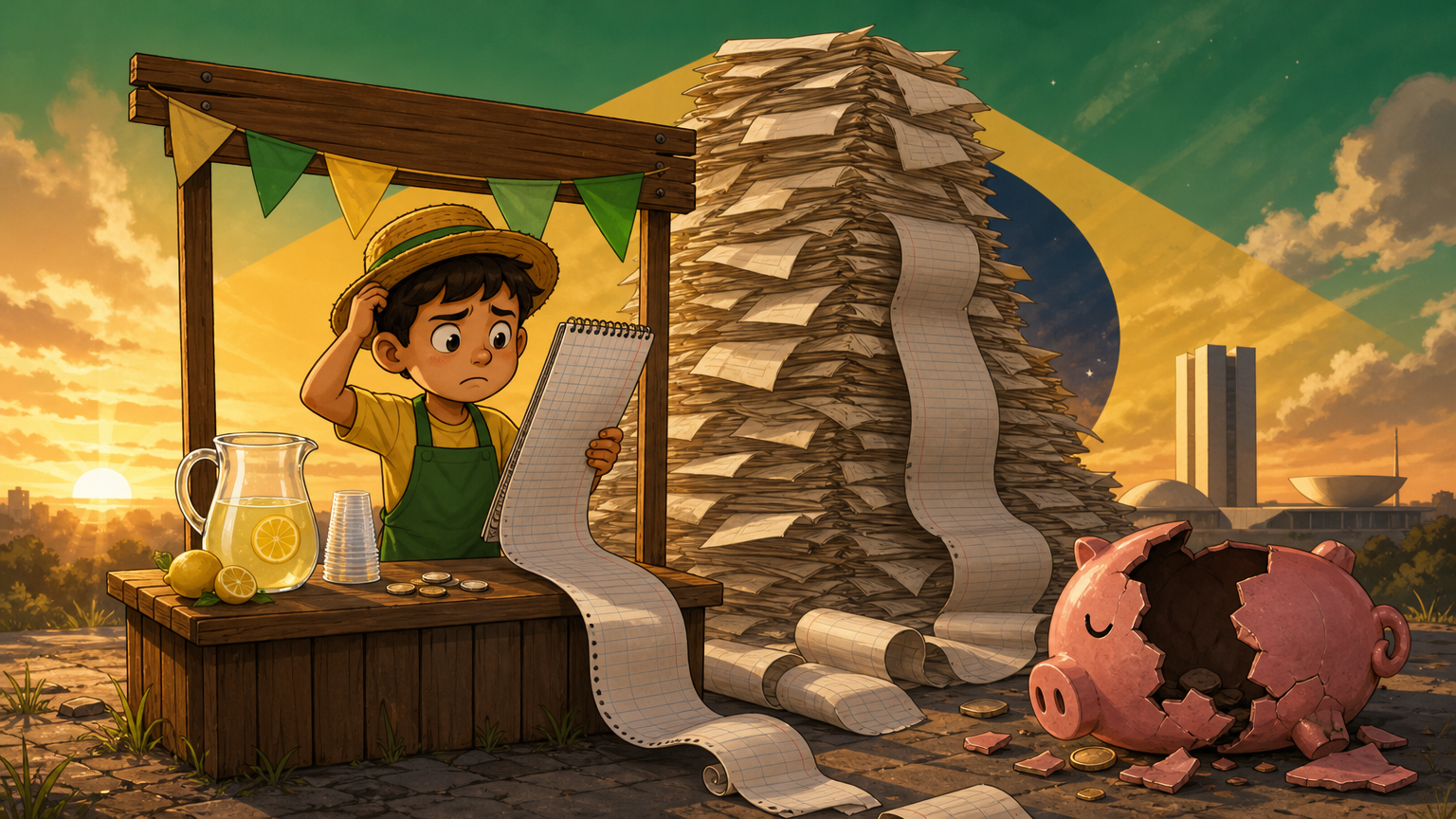
THE LEMONADE STAND TEST
Imagine a kid who runs a lemonade stand. Every month he earns $100 selling lemonade. But every month he spends $130 — new toys, treats for his friends, decorations for the stand. Where does the missing $30 come from? He borrows it.
Month one, no big deal. Month two, fine. But after a few years, the kid owes so much that a big chunk of his $100 goes just to pay interest on what he borrowed — money that disappears before he can even buy lemons.
That is basically the story of Brazil's government under President Lula, who was just re-elected with about 51.8% of the vote. And the lemonade stand problem is the best way I know to explain it.
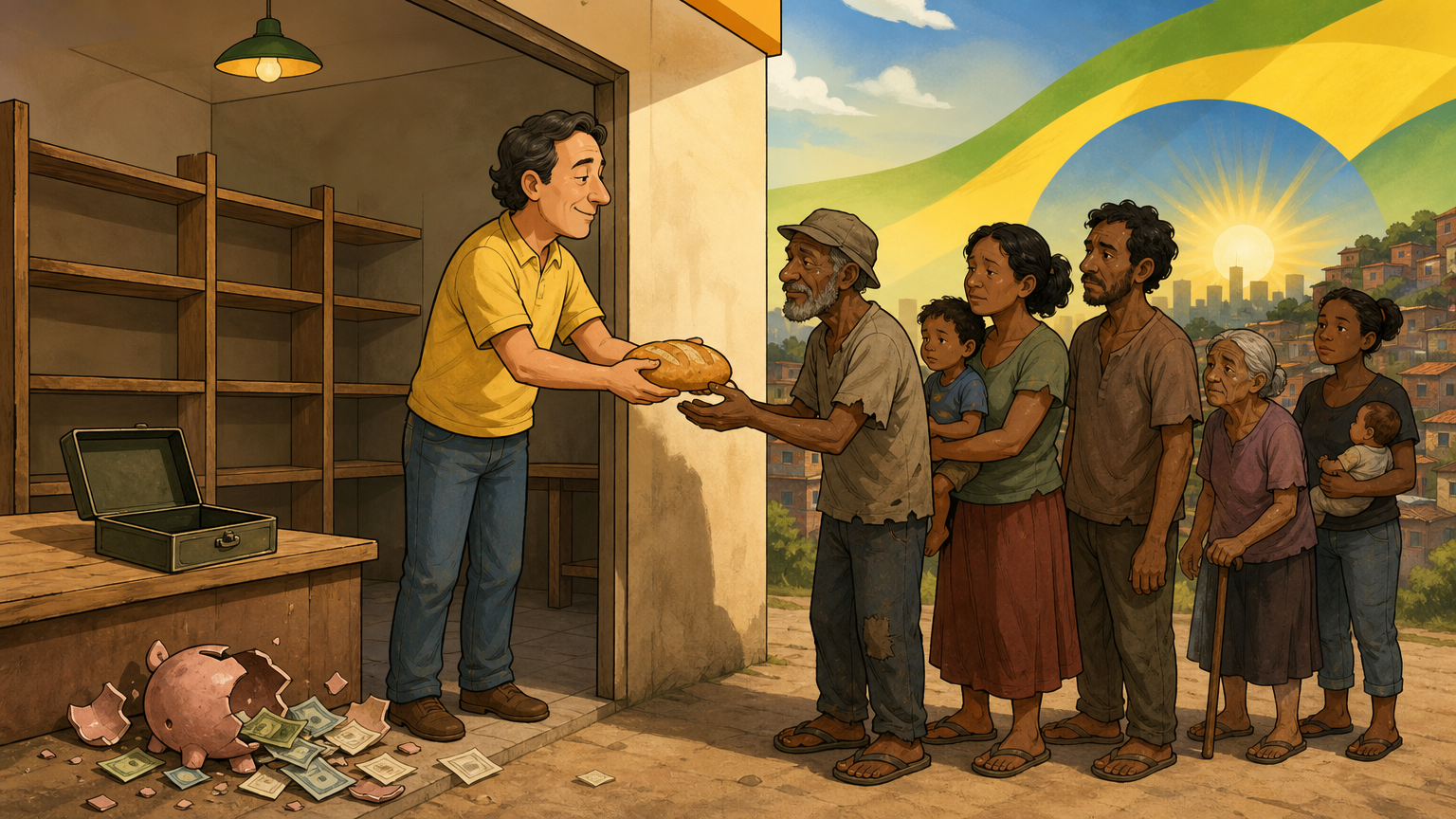
GOOD INTENTIONS, EXPENSIVE RESULTS.
The commentator Dennis Prager likes to point out that left-wing governments usually mean well — but good intentions are not the same as good results. You can genuinely want to feed the hungry and still bankrupt the kitchen.
Nobody is saying helping poor people is bad. The question is how you pay for it. And here the record is clear: in every single year of this term, Brazil's government spent more than it collected. In 2023 the gap was huge. In 2025 it got 32% worse than the year before — even though the government was collecting record tax money.
Read that again, because it's the heart of the argument: the problem isn't that people stopped paying taxes. The problem is that spending grew faster. It's not a lemonade problem. It's a shopping problem.
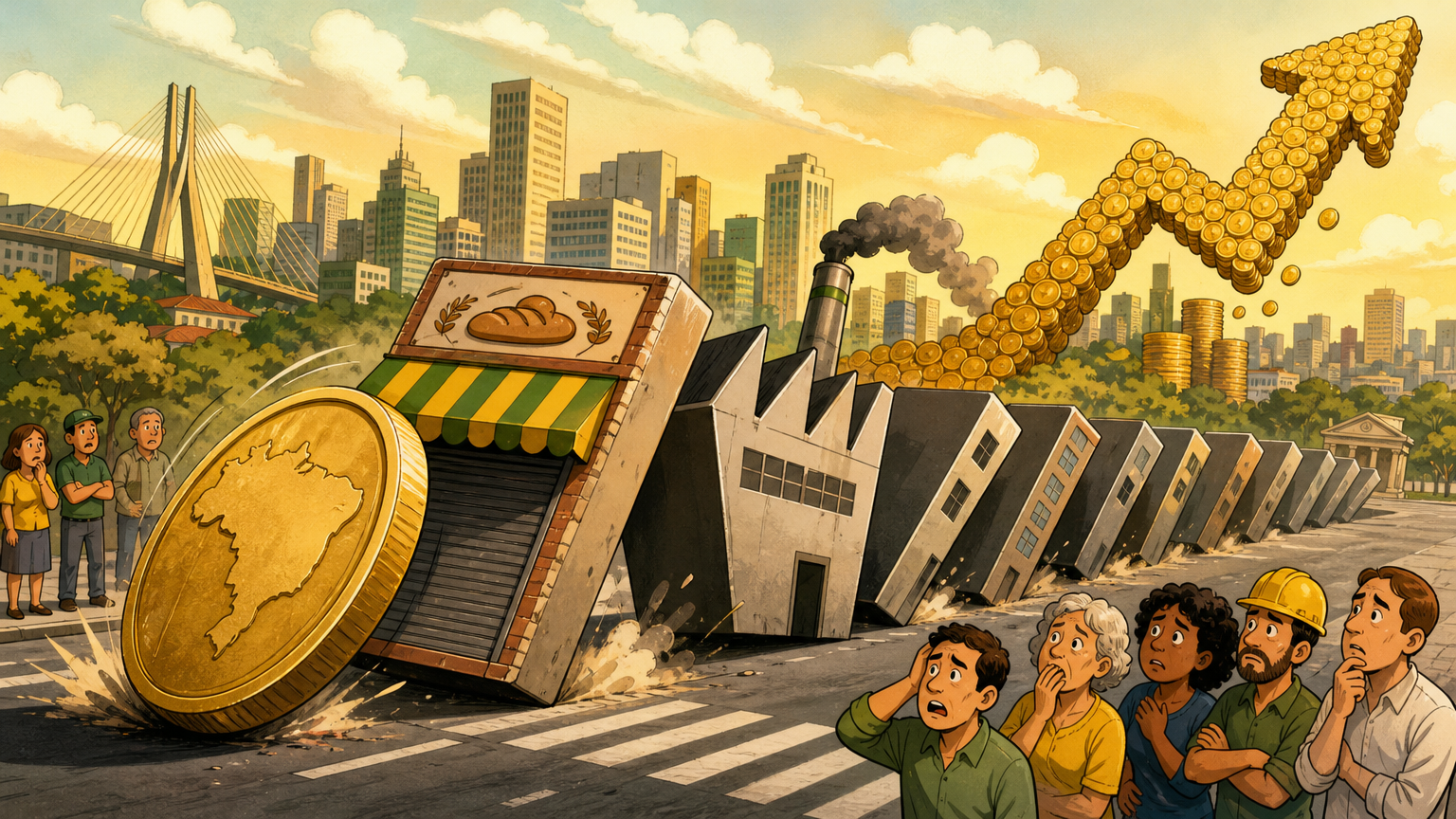
THE DOMINO EFFECT NOBODY TALKS ABOUT.
When a government keeps borrowing year after year, lenders start demanding higher interest to keep lending. Brazil's central bank ended up pushing its basic interest rate to 15% a year — one of the highest in the world.
And here's the part that hurts ordinary people, even the ones the programs were meant to help:
- A baker who needs a loan to buy an oven can't afford 15% interest. So he doesn't buy the oven. So he doesn't hire anyone.
- Companies across Brazil are drowning in expensive debt. By late 2025, a record more than 5,000 companies were in court protection trying to survive — up 20% since interest rates started climbing. (To be precise, the record is in court-supervised restructurings, not full bankruptcies.)
And here's the comparison that should make everyone stop and think. During the pandemic — when stores were literally shut down by law, when the entire service sector was forced to close its doors — court-protection filings fell. In 2020 there were 1,179 requests, and in 2021 just 891, the lowest number since 2014. Emergency credit, renegotiated debts and income support kept businesses breathing through the worst health crisis in a century.
Now read this carefully: in 2025, with no pandemic, no lockdowns, no closed stores — more companies ended up in court protection than at any point in the recorded series: 2,466 of them, a 13% jump over the year before.
Let that sink in. A once-in-a-century pandemic under a right-wing government hurt fewer companies than four years of fiscal mismanagement under a left-wing one. Businesses survived a virus that shut the whole country down. What they can't survive is 15% interest rates, endless deficits, and a government that treats the productive economy as an unlimited ATM.
Think about what that means: a company that isn't making a profit pays no taxes. A company that closes pays nothing and stops employing people. The money the government wants to distribute has to come from somewhere — and that somewhere is the productive economy it's slowly suffocating. You cannot redistribute a pie you keep shrinking.

WHOSE VALUES, EXACTLY?
Money isn't the only thing this government spends. There's also the part of public life where it spends your values.
I'll say it plainly: I believe the modern left has drifted far from the moral foundations that built Western civilization — the Judeo-Christian principles most of Brazil still lives by, whether people attend church or not. The family as the union of a man and a woman. Life as sacred from conception. Parents as the primary educators of their children. The left hasn't just disagreed with these principles; in many cases it has made overriding them a core project.
And this isn't my imagination — it's documented. Researchers who study Brazilian politics describe years of open conflict between progressive governments and the conservative Christian community over exactly these issues: abortion, gender identity, family arrangements, and education policy. The left's own agenda makes it clear:
- Life: the progressive bloc pushes to decriminalize abortion — in a country where the vast majority of evangelicals and Catholics believe life begins at conception.
- Education:when cities voted to keep gender-identity teaching out of their classrooms, the Supreme Court struck those laws down. The state, not the parent, decides.
- Family:proposals to protect the traditional family or allow homeschooling — standard practice in much of the democratic world — are routinely framed by the left as backsliding, bigotry, or "ideology."
Now look at the other side. The right in Brazil — imperfect, like every political current — has consistently stood where the Bible stands on these questions. After the 2022 election, the conservative bloc in Congress grew to around 259 federal deputies, precisely because voters wanted these values defended. Right-wing politicians are the ones who show up to defend life, to defend parents' authority over what their children are taught, and to defend the family as the basic unit of society — and then get called "extremists" for holding positions that were considered common sense for two thousand years.
You can vote for a party's economic plan and still notice when its moral compass points away from yours. On the fiscal side, this government spends money it doesn't have. On the moral side, it spends values it never respected. Both debts end up on the same bill — and our children inherit both.

ELECTION-YEAR MAGIC.
Now, if spending more than you earn were really "taking care of the people," you'd expect it to be spread evenly across the whole term. It wasn't. In 2026 — the election year — the government launched measures worth at least R$ 256.9 billion, most of them deliberately placed outside the normal budget rules so they wouldn't count against fiscal targets.
Economists themselves pointed out the obvious: that money could have been used to pay down the national debt. Instead, it appeared conveniently timed with a campaign. If the goal were good government, this would have been done in year one. Doing it in year four tells you what the goal actually was.
Meanwhile, the bill keeps growing: Brazil's federal debt passed R$ 9.29 trillion, with interest payments of nearly R$ 90 billion in a single month. That's the lemonade stand, four years later.
THE MAN WHO CAME BACK FROM PRISON.
There's one more thing about this story that should trouble anyone who cares about how a democracy works.
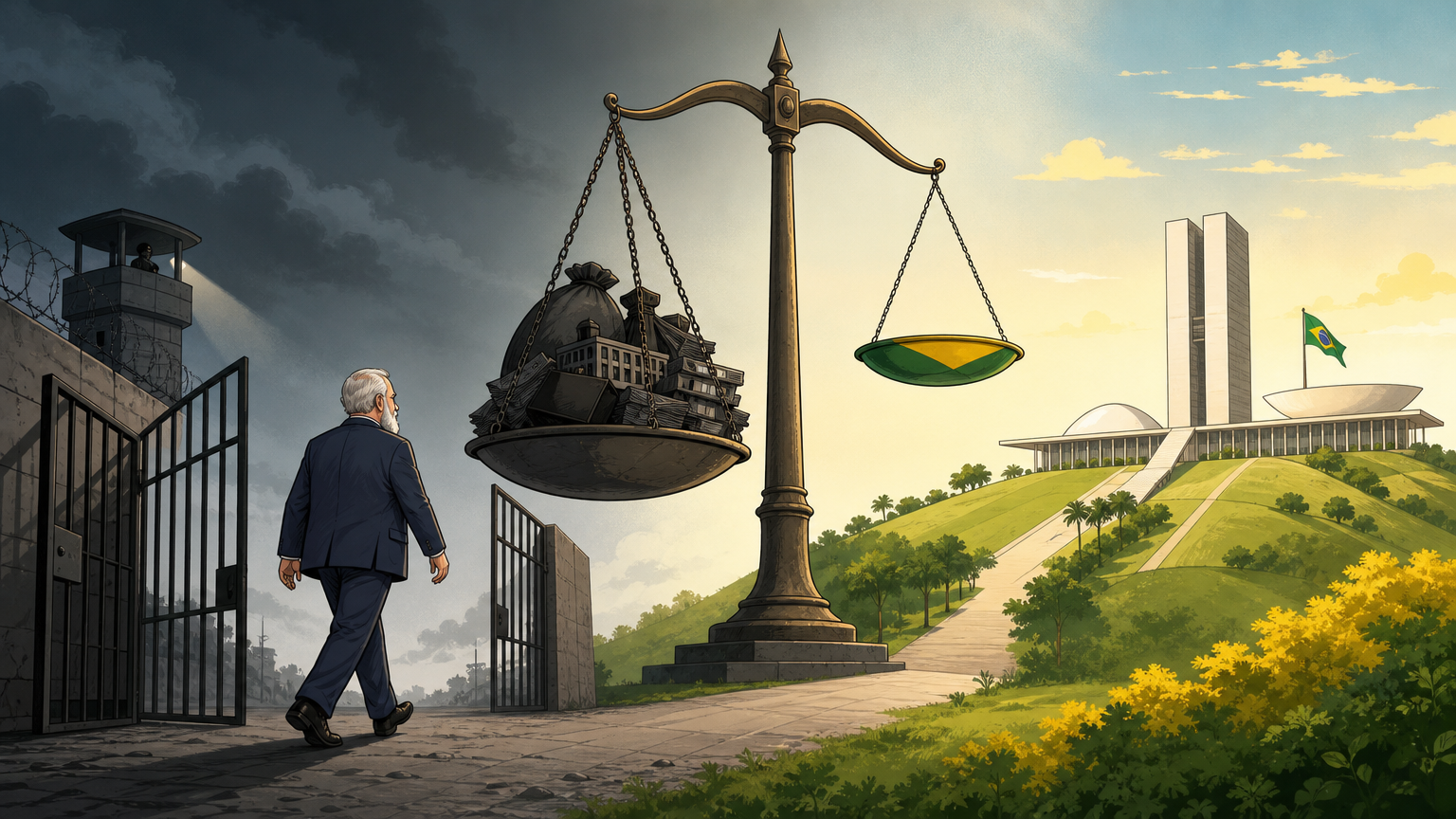
Lula went to prison in 2018, convicted in the Lava Jato corruption cases. In 2021, the Supreme Court threw the convictions out — not because new evidence proved him innocent, but because it ruled the judge in his case, Sergio Moro, had been biased, after leaked messages showed the judge and prosecutors coordinating strategy.
Here's where people split. His supporters say justice was finally done — the process was tainted, so the conviction was tainted. His critics — and I count myself among them — notice something else: the case was buried, the path to a fourth term was cleared, and the man who benefited was the same man whose political allies dominate the institutions that made the decision. When the court that frees you is run by your friends, it's hard for the rest of us to call that justice. We're told it was a "technicality." I call it a coincidence that keeps happening to the same person.
Whatever you believe about the trial itself, hold this thought: a man who was convicted, imprisoned, and then freed by the highest court is now starting a fourth term. And tens of millions of people looked at that whole story and said, "yes, give him more time." That's not just a fiscal problem. That's a memory problem.
FOUR TIMES IS A PATTERN.
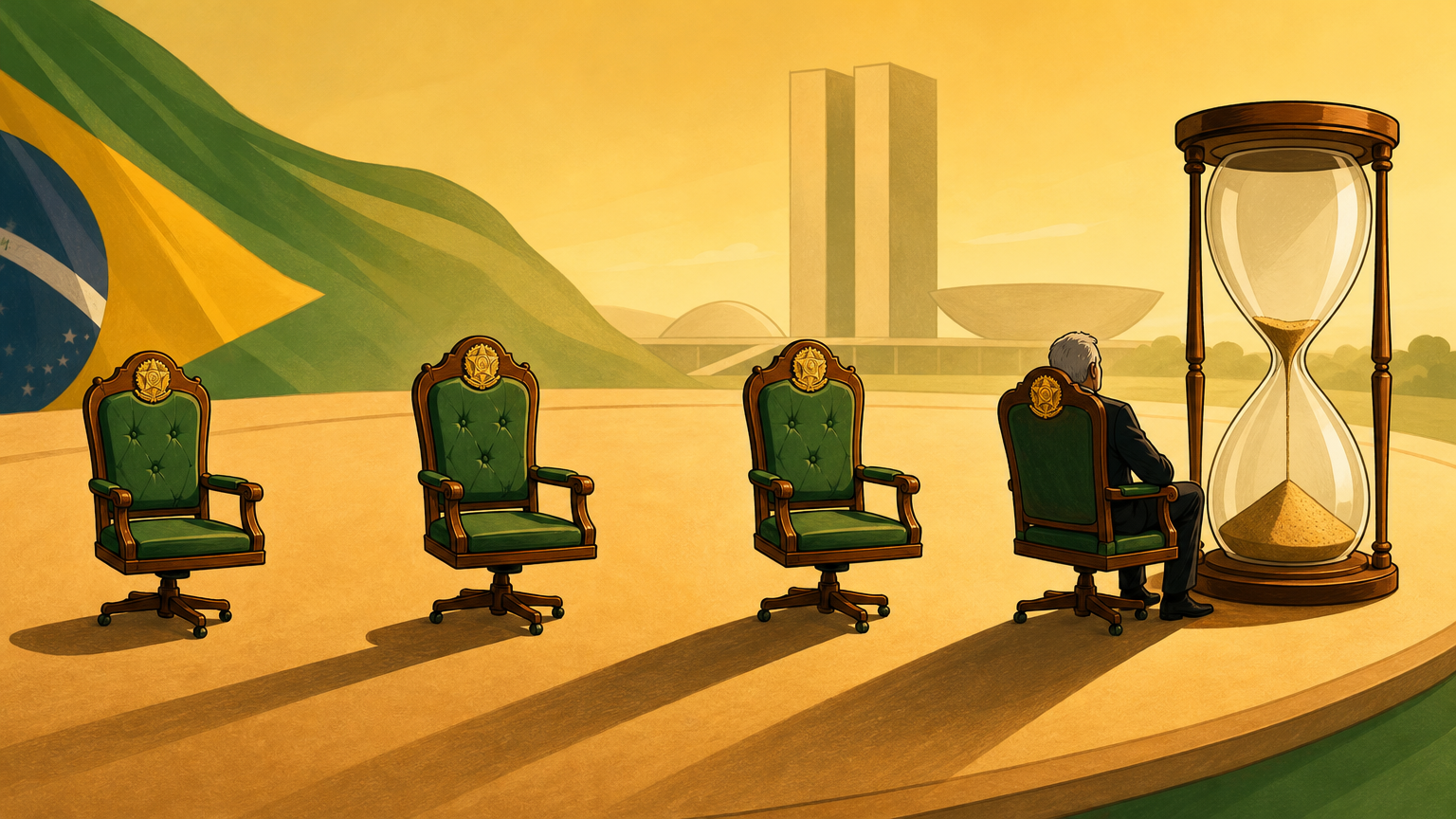
Lula first took office in 2003. After this election, he will have held the presidency for four full terms — more than two decades at or near the top of the country. He is 80 years old.
If four terms isn't a project of power, what would you call it? Every democracy needs rotation — new people, new ideas, someone whose biggest ambition isn't keeping the chair warm. A leader who genuinely believed in institutions would be preparing successors, not running again at 80. When someone stays that long, the cause stops being the country and becomes the cause of staying.
THE GOVERNMENT PEOPLE VOTE FOR.
There's an old saying, usually credited to the philosopher Joseph de Maistre: every nation gets the government it deserves.
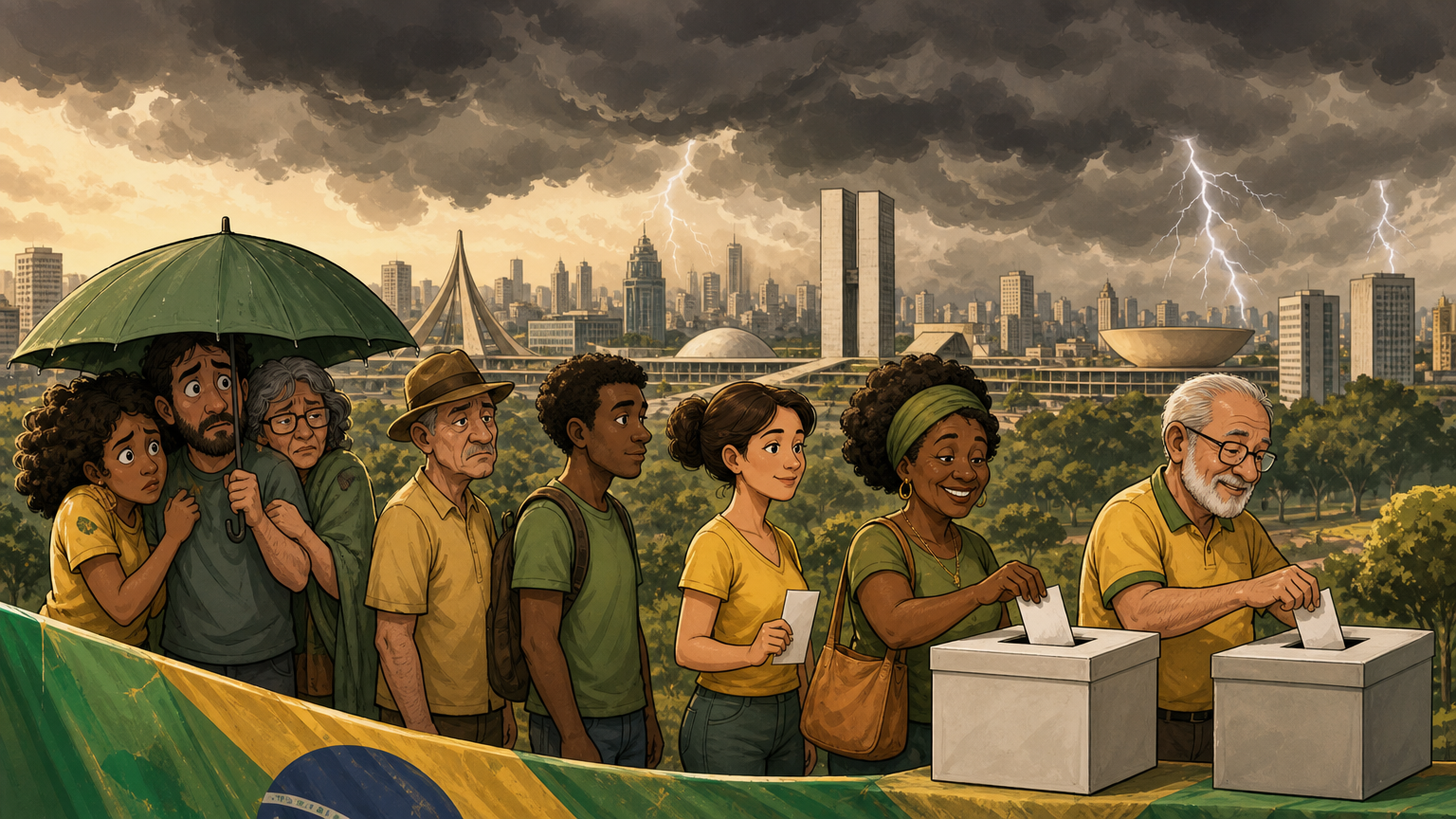
I used to think that was cynical. Now I think it's just arithmetic — the same kind of arithmetic as the lemonade stand. A majority of Brazilians looked at four years of growing deficits, record debt, 15% interest, thousands of companies in court protection, and a man in his eighties reaching for a fourth term — and chose more of it.
So here is my prediction, and I make it sadly, not angrily: things will get worse. The deficits will keep coming, because nothing that caused them has changed. The debt will keep growing. The interest will keep eating the budget — and the first things squeezed will be exactly the programs voters were promised.
And here is the part I want every reader to sit with: the people who voted for this will pay, and the people who voted against it will pay too. The lemonade stand kid's debt doesn't ask who voted for his spending. The bill arrives for everyone. That's the cruelest trick of bad government — it makes the careful pay for the careless.
To the 59 million Brazilians who voted differently this time: I'm not writing this to mock you. I'm writing it because we're on the same boat.

THE LESSON, KID-SIZED.
Wanting to help people is good. But a government that spends more than it collects, year after year, isn't helping — it's borrowing from the future and handing the bill to the very people it claims to defend: through high interest, dying companies, lost jobs, and a debt that never stops growing.
The lemonade stand kid eventually has to face his notebook of debts. Countries do too. The only question is whether they face it before the notebook runs out of pages.
SOURCES:
Election result:
https://agenciabrasil.ebc.com.br/politica/noticia/2026-10/lula-e-reeleito-presidente-do-brasil-em-virada-historica Election result (G1): https://g1.globo.com/politica/eleicoes/2026/noticia/2026/10/26/lula-reeleito-compare-evolucao-da-apuracao-do-2o-turno-e-do-1o-turno.ghtml 2025 deficit: https://agenciabrasil.ebc.com.br/economia/noticia/2026-01/deficit-primario-do-governo-central-totaliza-r-617-bilhoes-em-2025 Fiscal results (G1): https://g1.globo.com/economia/noticia/2026/01/29/contas-do-governo-tem-deficit-de-r-617-bilhoes-em-2025-mas-meta-fiscal-e-cumprida.ghtml Federal debt: https://agenciabrasil.ebc.com.br/economia/noticia/2026-09/divida-publica-federal-fica-estavel-em-agosto-e-chega-r-929-tri Election-year spending: https://www.cnnbrasil.com.br/economia/money/macroeconomia/acoes-do-governo-lula-somam-ao-menos-r-256-9-bilhoes-no-ano-eleitoral Pandemic-era court filings: https://www.cnnbrasil.com.br/economia/macroeconomia/pedidos-de-recuperacao-judicial-caem-em-2021-ao-menor-nivel-desde-2014/ Court filings 2020 (Serasa): https://www.serasaexperian.com.br/sala-de-imprensa/indicadores/recuperacao-judicial-tem-queda-de-15-em-2020-revela-serasa-experian Court protections 2025 record (Serasa): https://www.serasaexperian.com.br/sala-de-imprensa/indicadores/recuperacoes-judiciais-avancam-no-brasil-e-atingem-25-mil-empresas-em-2025-maior-nivel-da-serie-aponta-serasa-experian Interest rates and court protections: https://horadopovo.com.br/recuperacao-judicial-de-empresas-cresce-20-desde-o-inicio-do-ciclo-de-altas-da-selic/ Fact-check on company records: https://noticias.uol.com.br/confere/ultimas-noticias/2026/08/20/falso-brasil-recorde-falencias-2025.ghtm STF on gender laws: https://agenciabrasil.ebc.com.br/justica/noticia/2025-10/stf-suspende-leis-que-proibiram-ensino-de-genero-nas-escolas STF on Moro: https://agenciabrasil.ebc.com.br/justica/noticia/2021-03/stf-considera-que-moro-foi-parcial-nos-processos-de-lula Religious-conservative political activism: https://br.boell.org/pt-br/2023/07/13/ativismo-politico-evangelico-conservador-e-de-direita-panorama-recente Conservatism study (SciELO): https://www.scielo.cl/scielo.php?script=sci_arttext&pid=S0718-47272023000100206&lng=es&nrm=iso Conservative bloc in Congress: https://www.diap.org.br/index.php/209-eleicoes-2022/91179-conheca-a-pauta-conservadora-do-novo-congresso

Article by Marcelo Gameiro
Published 28 Oct 2026