Using Calligraphy to Learn Vocabulary words.
Learning vocabulary is an essential part of acquiring a new language or improving your mastery of your native language. It's a key component of effective communication and a foundation for broader linguistic understanding. While there are many methods for learning vocabulary, such as flashcards, rote memorization, and mnemonics, calligraphy exercises offer a unique and creative approach to acquiring new words and their meanings.

Calligraphy has always been a significant part of my life. It all started in my childhood, when I was in school and we still had to deliver our homework on written paper by hand. I remember one time, I was assigned to write a research paper on basketball and I decided to copy the entire Encyclopedia Britannica on that topic by hand. This was a time-consuming and challenging task, but it helped me to develop my handwriting skills and appreciate the beauty of calligraphy.
As I got older, I started to understand the importance of having good handwriting, not just for school assignments but also for personal expression. I still remember those calligraphy notebooks that I used to practice in, filling them with different letters, words, and phrases. There was a great joy in the process of writing and seeing my handwriting improve over time.
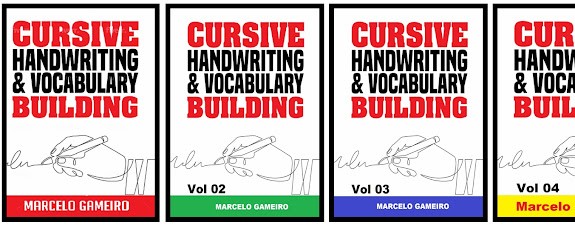
Today, I do everything on computer, but I still miss those good old days of writing with my own hand, and I fell we could provide the benefit and joy for the younger generation who may start using computer before they learn how to write. There is so many benefits of learning and practicing calligraphy, the book below (The Forgotten Skill) will teach you many of those benefits, in short calligraphy will always have a special place in my heart.

Calligraphy, the art of beautiful handwriting, has been used for centuries to preserve knowledge and communicate ideas. By incorporating vocabulary into calligraphy exercises, you can enhance your ability to remember and understand new words. Writing words and their definitions by hand engages multiple parts of your brain, helping to create a stronger connection between the word and its meaning. The physical act of writing reinforces the memory of the word, making it easier for you to recall it later.
The process of calligraphy can also help you to focus and concentrate. As you write, you are required to pay attention to the formation of the letters, the spacing between words, and the overall appearance of the text. This level of focus helps to imprint the new words in your mind, making it easier for you to recall them when you need them.
Incorporating calligraphy exercises into your vocabulary-building routine can also be a fun and creative way to break up the monotony of traditional study methods. You can experiment with different styles and techniques, making the process of learning new words an enjoyable and engaging experience. The end result is not only a new word learned, but also a beautiful piece of art that you can display or use as a reminder of your new knowledge.
To get started with calligraphy exercises for vocabulary-building, all you need is a pen and paper. Choose a word and its definition, and then write it in a neat and legible hand. Try to use a different style or technique with each word to keep things interesting. You can also experiment with different materials, such as fountain pens, brush pens, or colored ink.
Calligraphy exercises are not just beneficial for adult learners, they can also be a great way for young kids to improve their vocabulary and build their language skills. By incorporating the physical act of writing into the learning process, kids can strengthen their fine motor skills and hand-eye coordination. The creative aspect of calligraphy also helps to foster a love of learning and a sense of accomplishment when new words are learned and practiced.
For younger children, choose simple words and definitions, and encourage them to decorate their calligraphy with illustrations or colors. This can help to make the process of learning new words a fun and engaging experience, and can also help to foster their creativity and imagination.
Calligraphy exercises can also be a great way for kids to learn the fundamentals of good handwriting. By practicing the formation of letters and words, they can improve their overall penmanship and develop a love of writing.
In conclusion, calligraphy exercises are not just a valuable tool for adult learners, they can also be a great way for young kids to improve their vocabulary also calligraphy exercises can be a valuable tool in enhancing your ability to learn and remember new vocabulary in any age. By combining the physical act of writing with the creative process of calligraphy, you can engage multiple parts of your brain and create a stronger connection between the word and its meaning. So, grab a pen and paper and start learning new words in a fun and creative way!
# E02 Qi Xin Yu 4136 # I did write a review of this post from my teacher. Here is my review:
After reading the blog Learn English and Improve Your Accent Through Music, I’ve gained a fresh perspective on language learning that feels far more approachable and enjoyable than the rigid methods I’ve relied on for years. For too long, my idea of studying English was limited to memorizing word lists from thick textbooks and drilling grammar rules in isolation—an approach that left me frustrated, bored, and even a little afraid of the language. I’d spend hours cramming vocabulary like “abandon” into my brain, only to forget it a week later, and I’d struggle through complex grammar rules without any meaningful context to make them stick. This made learning feel like a chore, not something to look forward to.🎊🎊🎊
The blog’s core insight—that language learning can be naturally integrated with activities we already love—resonated deeply with me. Music, it explains, is not just entertainment but a powerful tool for absorbing vocabulary, sentence structures, and even cultural nuances in a stress-free way. By listening to and singing along with English songs we enjoy, we can pick up new words and expressions without the pressure of conscious memorization. Singing out loud also helps us practice pronunciation and intonation, refining our accent in a way that traditional textbook study often fails to address. This method is simple, effective, and requires no specialized skills—all we need to do is have fun while we learn.🎉🎉🎉
One of the biggest challenges I face now is breaking my old, rigid study habits. I’m used to treating English as a subject to “study” rather than a living language to experience. I also worry that I’ll make mistakes when singing along, or that I won’t understand every word in a song at first. But the blog reminds me that mistakes are part of the process, and the most important thing is to practice consistently and enjoy the journey.🌹🌹🌹
Looking ahead, I’ve set clear goals to incorporate music into my English learning routine. I plan to select one English song each week, download its lyrics, look up any unfamiliar words, and practice singing it until I feel comfortable with both the pronunciation and the meaning behind the lyrics. Over time, I hope this consistent exposure will help me internalize authentic expressions, improve my listening comprehension, and develop a more natural accent. I also want to expand this approach to other forms of media, like English-language movies and TV shows, to immerse myself in natural conversations and diverse accents.👍🏻👍🏻👍🏻
Ultimately, this blog has inspired me to reimagine what English learning can be. It doesn’t have to be confined to classrooms and textbooks—it can be a joyful, ongoing experience woven into the things I already love. By integrating music and other media into my learning strategy, I hope to transform English from a daunting subject into a vibrant language I can truly connect with and enjoy.☘️☘️☘️

Article by Marcelo Gameiro
Published 07 Feb 2023